Sunday June 9 8:30 Retzer Nature Preserve 501 E College Ave in Waukesha
Time for our annual Henslow Sparrow and Bobolink search on the hill at Retzer! Nine Boblinks were seen there om June 2.
Interested in bugs too? Get the BugLady newsletter on the Bug of the Week every Tuesday. Kate Redmond is the lady behind the writing. She is brilliant, funny and makes learning about our insect population a joy!
Native Plant Sales:
June 9 Schlitz Audubon Nature Center from 9-1
What was your spark bird? WUWM Chirp Chat wants to know! Take a minute and tell them
For additional SE Wisconsin Bird Walks – scroll all the way down!
Last Week:
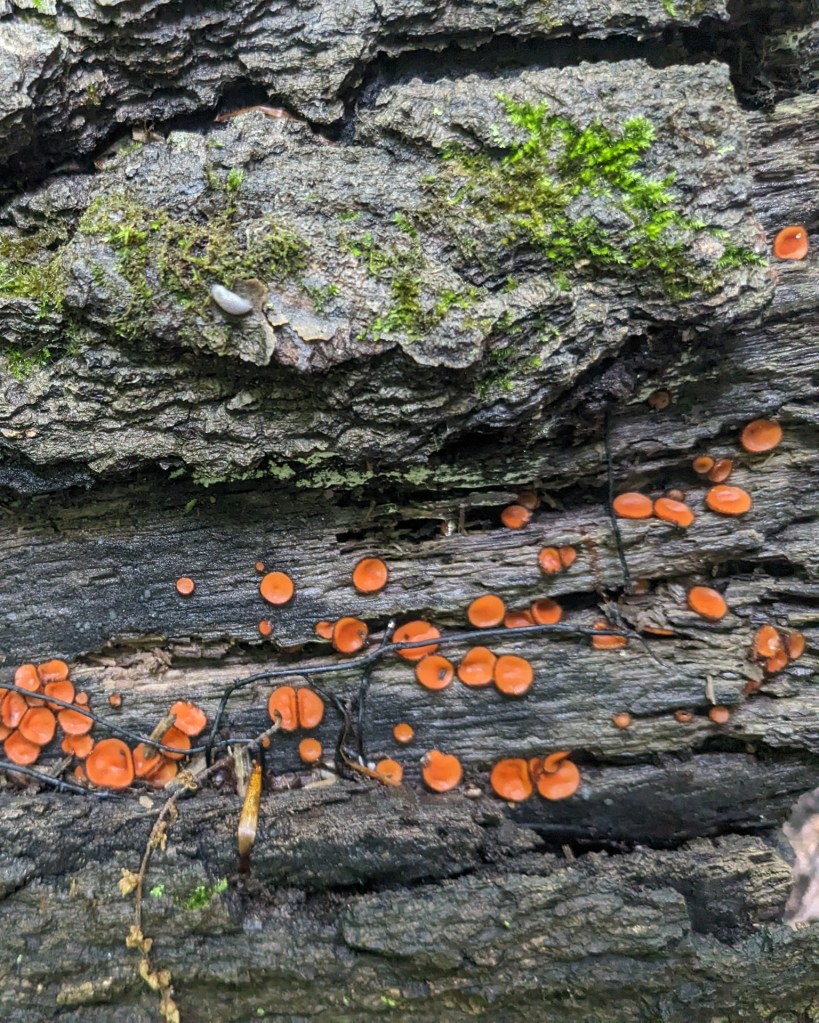
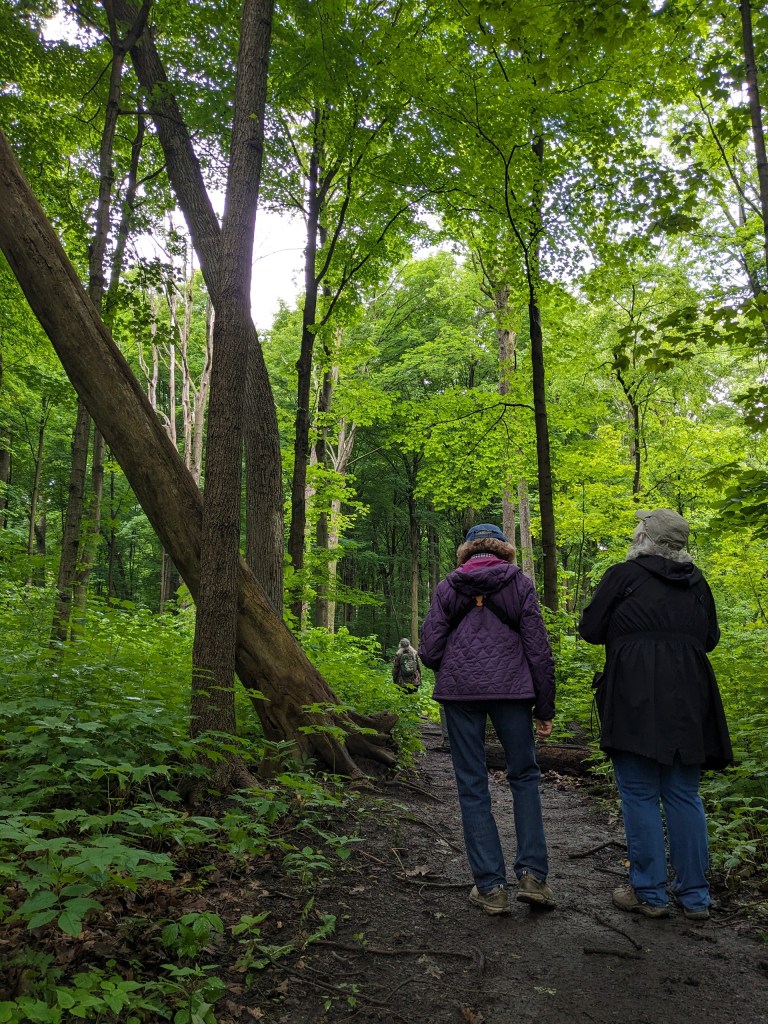
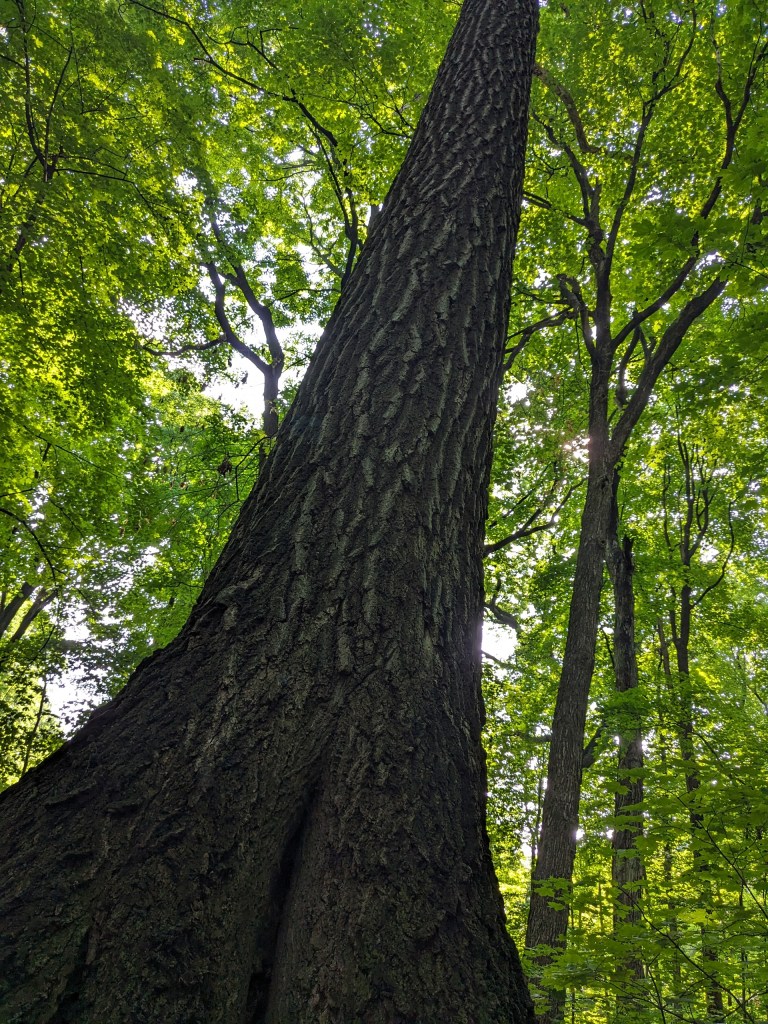
It was supposed to be a quick walk on a barely one-mile trail through Cudahy Woods and then onto Wilson Park. We never made it to Wilson. It turned into a 2.5 hour muddy birding, tree-ing, flower-ing, and fungi-ing hike. This is a wonderful place with huge old trees and an understory filed with dogwoods, wood anemone and poison ivy. It’s beautiful.
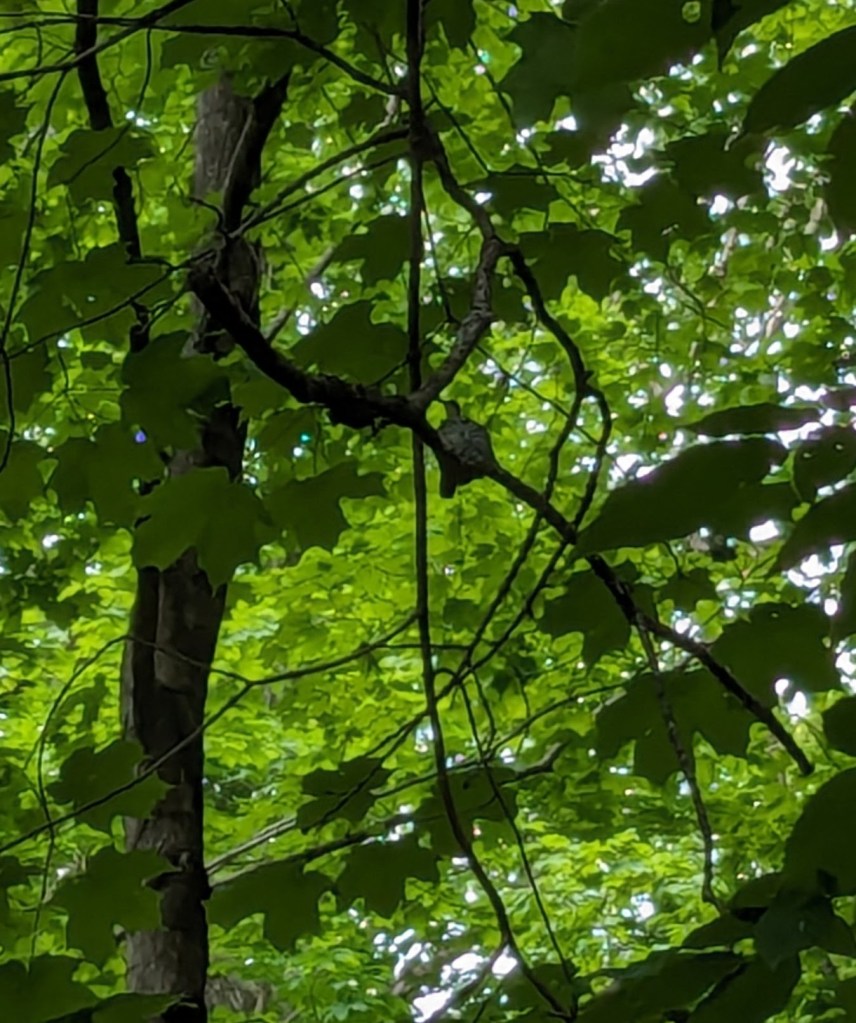
The birds were heard more than they were seen. The Acadian Flycatcher was very vocal, treating us to it’s call for half of our time there. Also heard and sadly not seen was a Scarlet Tanager. Among the spotted birds were Red-headed and Red-bellied Woodpeckers, Chickadees, White-breasted Nuthatches, and a Great-crested Flycatcher. As we were nearly out of the park, a Ruby-throated hummingbird buzzed above us and settled on her nest. Such a treat!
The parking lot is small. The trails are muddy and crossed with down trees. Airplane take-offs and landings can drown the bird songs. And looking for bird high up in the canopy will strain necks. We will go back!
eBird list: Cudahy Woods
Milwaukee parks that need birding this week
The county tracks every parkland and records to see if there are surveys recorded on eBird. Every year they identify priority parks by week. A park could be a priority because there are no surveys done in that week; or because there are surveys but they think there may be more species there than previously identified.
Based on the spreadsheet they create, Wisconsin Metro Audubon Society curates suggested locations based on accessibility to the property (some of the parkway locations are difficult to access) and availability on the ebird hotspots tool. Click on the triangle to see this week’s list.
Milwaukee Parks that need birding this week
- Back Bay Park
Cudahy Woods
Dretzka Park
Honey Creek Pkwy #4
Juneau Park north (approximate the middle line of Juneau)
Little Menomonee River #3
Kohl Park east of 76th
Kosciuszko Park
McCarty Park
Menomonee River Pkwy #8
Pulaski- Cudahy
Pulaski – Milwaukee
Rotary Arboretum (use the hotspot called Milwaukee River Greenway -North Ave to Locust St)
Servite Park
Please track your time spent! At the end of the year WMAS provides hours to the county. Find a park and a park map: https://county.milwaukee.gov/EN/Parks/Explore/Find-a-Park
Note- even if it’s already been birded this week, going another day (or a different time of day) helps. The parks department has a number of surveys it wants for each park, so birding more than once this week is very helpful!
Ongoing Bird Walks:
Sundays 8:00am Wisconsin Metro Audubon Society Bird Walk (WMAS)
Wehr Nature Center 9701 W College Ave. No registration required.
Second Sundays 10:00-11:30am The Art of Birding with Chuck Stebelton at Lynden Sculpture Gardens will run April through August. Register for walks HERE by the Friday before
Tues 8:00am Menomonee Valley Urban Ecology Center (UEC), 3700 W Pierce St
Wed 8:00am Washington Park Urban Ecology Center (UEC) 4023 W Galena St
Thurs 8:00am Riverside Park Urban Ecology Center (UEC) 1500 E Park Place
Fridays 7:30am Riveredge Nature Center Migration Bird Walks in May
Fridays 8:00am Bird walks at Retzer Nature Center walks with Goss Bird Club

Third Saturdays 8:00am Schlitz Audubon Nature Center 1111 E Brown Deer Rd, Registration required, https://www.schlitzaudubon.org/event/saturday-morning-bird-walk-15/
Saturdays 7:00am Goss Bird Club bird around Waukesha County. See Field Trip Schedule – Next event Saturday at Monches Woods
Saturdays 8:30 Lake Park Warbler walks run April 20 through end of May
Check out Chirp Chat episodes all about birding Milwaukee
Nearby Bird Clubs to checkout:
Benjamin F. Goss Bird Club meets at Retzer Nature Center.
Hoy Audubon Society meets in Racine
Ozaukee Washington Birding Coalition meets at Riveredge Nature Center, Lac Lawrann in West Bend, Mequon Nature Preserve and Cedarburg Bog
Schlitz Audubon Nature Center Bird Club second Wednesday at 6:30pm
Wisconsin Metro Audubon Society (WMAS), third Wednesday at 7:00pm Wehr Nature Center
Upcoming:
Have a birding event to share? Let me know, share on the Contact Page
May
UWM Field Station at Cedarburg Bog starting in May. Click on class link for more information and to register:
- Introduction to Bird Song, Thursdays 6:00-7:30pm, May 02 – June 06, 2024
- Field Herpetology: Amphibians and Reptiles of Wisconsin, May 31-June 01, 2024
- Sedges of Wisconsin, June 07-08, 2024
- Experiences in Great Lakes Ethnobotany, June 28-29, 2024
- Frolic, Fetch & Sketch, July 26-27, 2024
- Got Algae? Algal Diversity of the Kettle Moraine, August 02-03, 2024
- Wetland Delineation, August 09-10, 2024
- Restoring Upland Plant Communities, August 23-24, 2024
- Understanding Bird Populations and How They Change,
Thursdays 6:00-7:30pm, September 12 – October 17, 2024
June
Cicadas!
Walworth County, Big Foot Beach State Park
1550 S Lake Shore Drive, Lake Geneva, WI 53147
Date TBA – Tentative 6/1/24 or 6/8/24 – 11:00 AM – 1:30 PM
We will be meeting at the park. Send an email to wimetrobird@gmail.com to receive updates.
Register on this Form: https://shorturl.at/FZ249
2024 is an especially exciting year for the 17 year cicada. This year Brood XIII will emerge in Northern Illinois and a few areas in the Lake Geneva, WI area. According to Cicada Mania, not since the Thomas Jefferson presidency (1803) has a 13 year cicada, Brood XIX also emerged in Illinois and Indiana at the same time.
WMAS at The Nest Starting Birding
Thursday June 6, 6:00pm
The Nest 5648 Broad St Greendale
Bird walk and presentation by Colleen Resendiz. Details HERE
Cedar Grove Ornithology Reserve at Lac Lawrann Nature Conservancy in West Bend
Wednesday, June 12 7:00-8:30pm
“The History, Research, Thrills and Surprise Findings at the Cedar Grove Ornithological Research Station” by station manager Danny Erickson. The western shore of Lake Michigan has long been known to concentrate birds of prey during their annual southward migration each Fall. To study this movement, scientists long ago established the Cedar Grove Ornithological Research Station, the longest continuing raptor banding operation in North America, to band migrating raptors and track avian migratory trends. Erickson will discuss CGORS history, the thrills of raptor migration and the exciting research findings helping us to better understand and conserve raptors in the western Great Lakes region.
More info and Zoom link: https://www.riveredgenaturecenter.org/event/owbc-cedar-grove-ornithology-reserve/
Stroll with a Naturalist: Birding by Ear
Thursday June 13 10:00am-12:30pm Riveredge Nature Center
https://www.riveredgenaturecenter.org/event/stroll-with-a-naturalist-birding-by-ear/
Birds, Bats, Toads and Snakes Oh My!
Saturday June 15 at 1:00pm, Sunday June 16 at 2:00pm
Havenwoods State Park with Nearby Nature
In 2023 Nearby Nature Milwaukee began a comprehensive inventory of wildlife in Hopkins Hollow. The story of how this research was conducted is fascinating and the first-year results are very interesting. The combined data is not only fascinating, but will help us plan future habitat improvements as we start to develop a “biodiversity” plan for Lincoln Creek. We hope you’ll join us for this presentation! The research was funded, in part, by the Bird Protection Fund of the Natural Resources Foundation. More details HERE
Milwaukee Public Museum BioBlitz
June 21-22 Mequon Nature Preserve
Twenty-four hours of documenting all biologic species on site. More about it here: https://www.mpm.edu/bioblitz
Stroll with a Naturalist: Nesting Birds
Thursday June 27 10:00am-12:30pm Riveredge Nature Center
https://www.riveredgenaturecenter.org/event/stroll-with-a-naturalist-nesting-birds-2/
 Milwaukee Birders