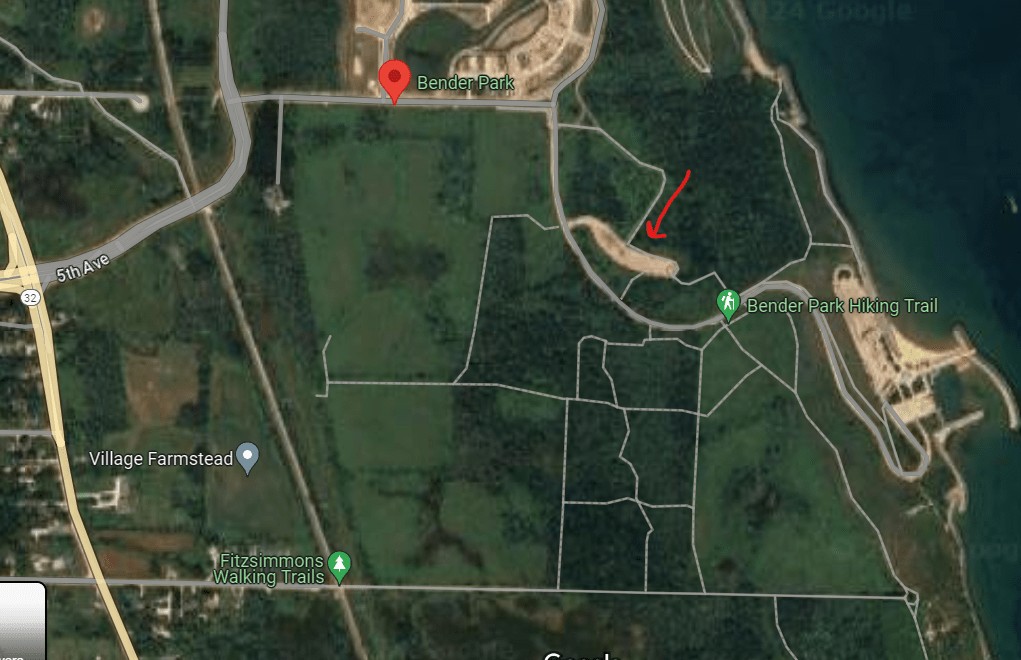
Sunday, Aug 18 8:00am meet at Bender Park NW gravel lot at north end
All levels welcome, no registration required
Parking lot pin HERE Note parking lot is rough, dirt and bumpy
We were here in spring – time to come back and see what’s happening!
Recent lists: HERE
ACT NOW – Kayaking & Birding at Horicon
Friday, Aug 16 at 8:00 am at Blue Heron Landing
Hiking Horicon instead – please email Donna or Katie if interested. Rental company is charging an additional $38 to shuttle us to starting point
Rent a canoe or kayak from Blue Heron or bring your own.
Bring water, food, sunscreen and binoculars
The forecast still shows a chance of showers but it is getting clearer. Though we can handle Horicon in the rain as we did for the May boat tour.
Reserve a kayak or canoe here: https://www.horiconmarsh.com/
On the rental calendar, click on the “16” on Aug 16 and choose your vessel
Let Donna (donnaozomiller at gmail.com) or Katie (Kfisher8689 at gmail.com) know if you are coming.
Adding to your garden this fall? Schlitz Audubon Nature Center is having a Native Plant Sale Sunday August 18 from 9:00am-1:00pm. Details HERE
Help the Greater Prairie Chickens – Public comments accepted through Aug 16. To comment via the Internet, visit apps.psc.wi.gov, select the “file a comment” tab and select the link under the “Vista Sands Solar Farm” entry. The following four recommendations are from the Wisconsin Society for Ornithology website:
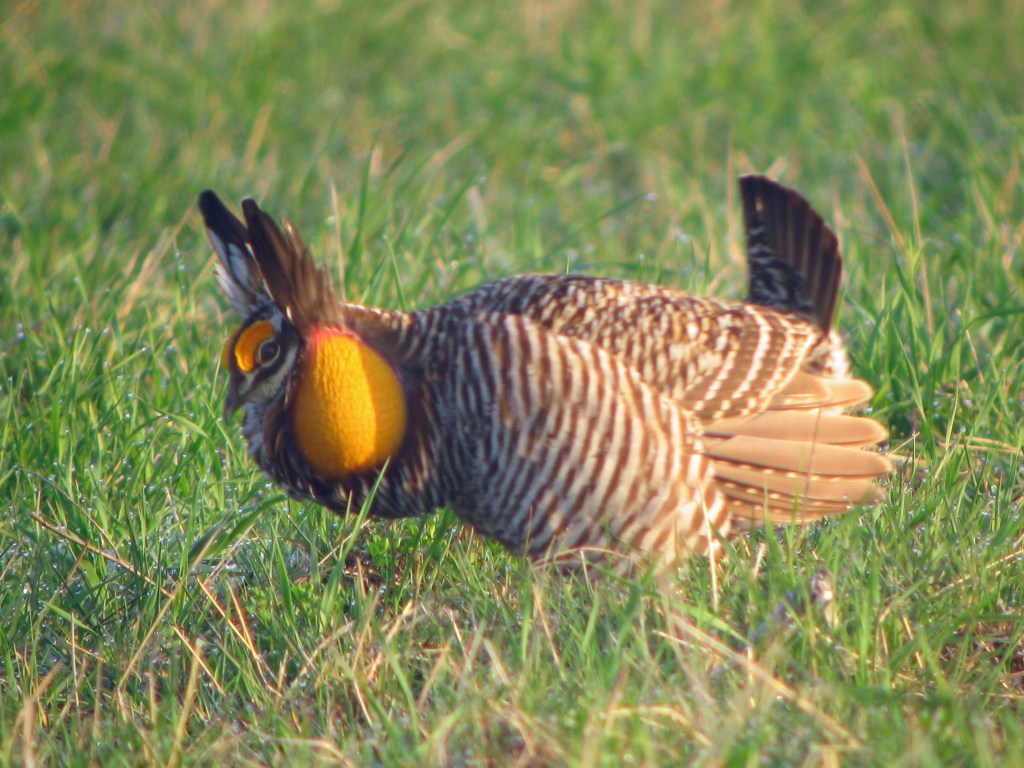
-Removing 10 Primary Array Areas (17, 20, 21, 23, 37, 38, 43, 44, 50, 51) and four Alternate Array Areas (20, 32, 41, and 53), all of which are immediately adjacent to the Buena Vista Wildlife Area.
-Establishing a half-mile buffer zone between solar arrays and Buena Vista Wildlife Area, and a one-mile buffer zone between solar arrays and prairie-chicken leks.
-Requiring that all fencing around the project be raised a minimum of 8 inches off the ground to allow for the movement of prairie-chicken hens, chicks, and other ground-nesting birds.
-Requiring that bird diverters be placed on any overhead transmission lines within one mile of Greater Prairie-chicken leks.
The second and final round of public comments is open through Friday, August 16th. We urge all WSO members to submit comments to the PSC asking the commission to adopt the primary recommendations of the Final EIS, and the Wisconsin Wildlife Federation, as they apply to this state-threatened bird.
Comments crafted BY YOU (as opposed to form letters or petitions) are most effective. Please feel free to include any of the details we’ve outlined above, as well any experiences you’ve had observing this charismatic bird at Buena Vista.
The word is getting out – Milwaukee is a great place for birding! See Caitlin Looby’s JSonline article: https://www.jsonline.com/story/news/local/2024/08/13/fall-bird-migration-is-ramping-up-heres-where-to-look-in-milwaukee/74593335007/
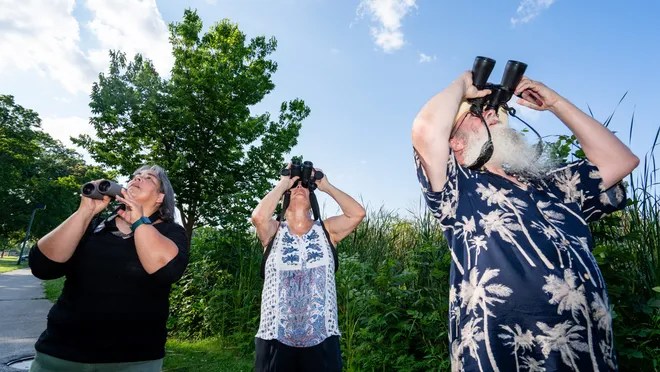
Love this quote:
The best birding is when there is a combination of new and experienced birders, [Rita] Flores Wiskowski said, explaining that new birders bring excitement, and experienced ones bring knowledge.
A reason to go back to County Grounds New signage and trail info installed. This Saturday at 9:00am there will be a History Tour of the park. The new sign lists 9 points of historical interest. We plan to visit several of those Saturday morning. In honor of the sign dedication, we have the first history tour of 2024 from 9-11am! Visitors can come for either the Sign Celebration or History Tour – OR BOTH! Register for the FREE tour HERE
For additional SE Wisconsin Bird Walks – scroll all the way down!
Last Week:
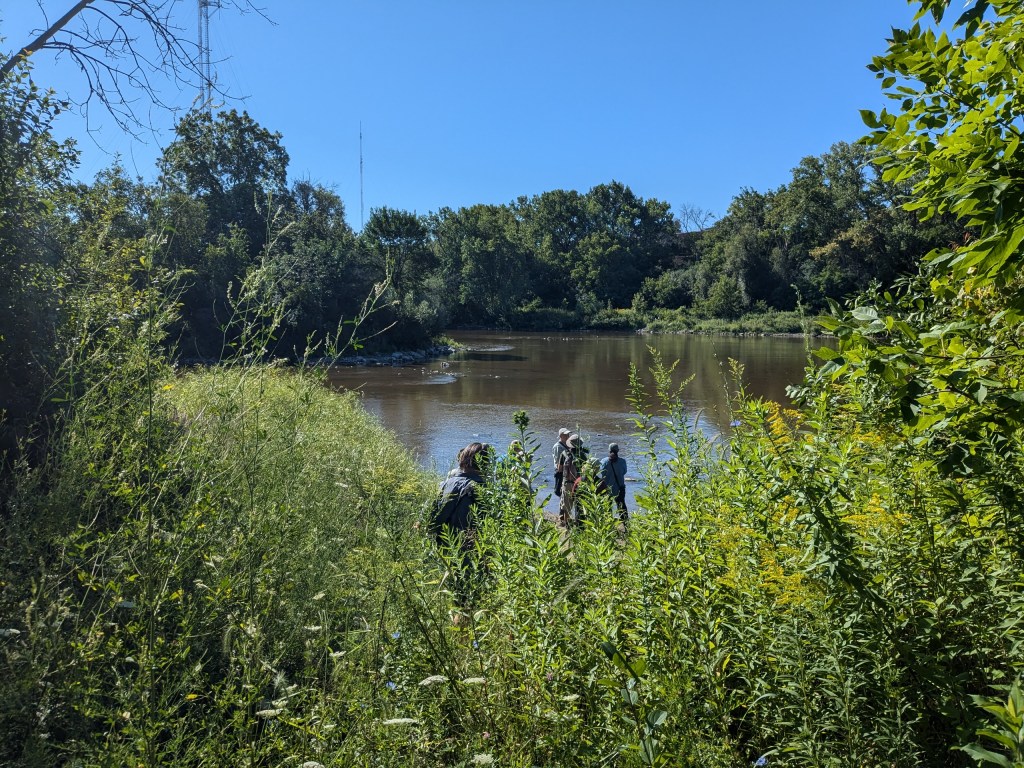
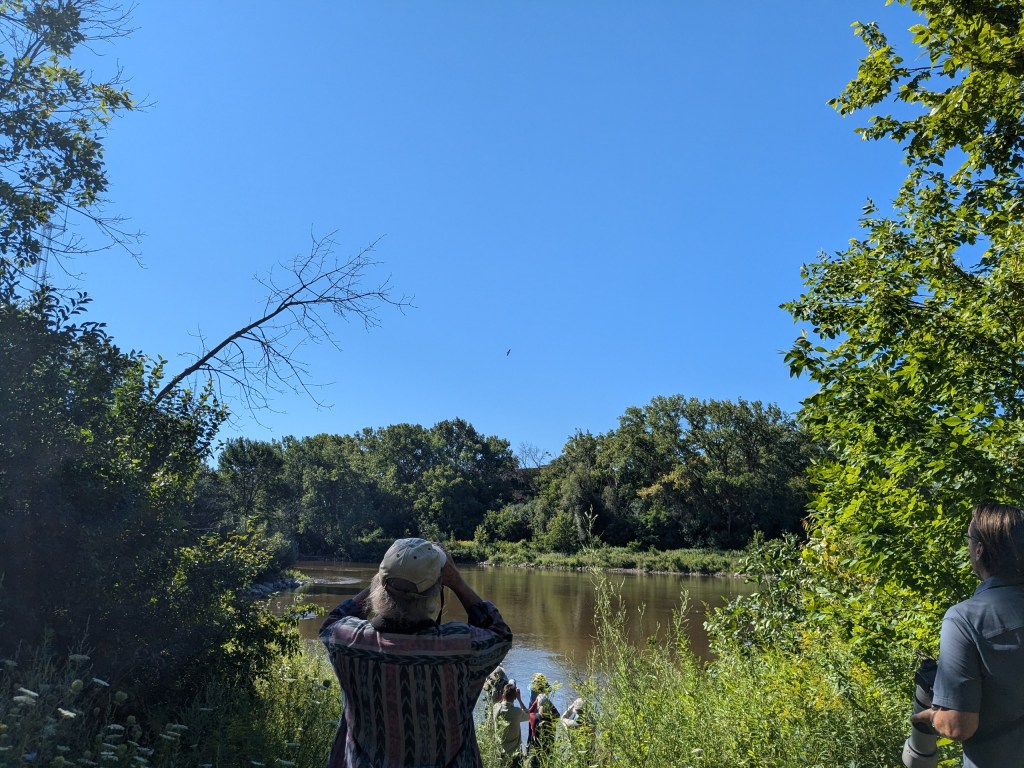
We met up with Andy of Signs of Life in Estabrook Park. We started our walk at the pond. There we saw Olive-sided Flycatchers, Wood Ducks and Mallards. Continuing south of the dog park, we hoped for some thrush or sparrows on the wooded trail. No luck on those. At the Milwaukee River we saw a Blue Heron perched on a low branch. A stunner. Continuing north on the river trail, we saw a Great-Crested Flycatcher and Blue-Gray Gnatcatcher sharing a branch on the island. We waited for the Osprey Andy had been seeing. And our wait paid off. We saw it, fly, scan the river, and hover over the river before landing. Another beautiful day birding. See full list HERE
Milwaukee parks that need birding this week
The county tracks every parkland and records to see if there are surveys recorded on eBird. Every year they identify priority parks by week. A park could be a priority because there are no surveys done in that week; or because there are surveys but they think there may be more species there than previously identified.
Based on the spreadsheet they create, Wisconsin Metro Audubon Society (Thanks Colleen) curates suggested locations based on accessibility to the property (some of the parkway locations are difficult to access) and availability on the ebird hotspots tool. Follow Wisconsin Metro Audubon on Facebook for their weekly park posts. Click on the triangle to see this week’s list.
Milwaukee Parks that need birding this week
- Bender-Fitzsimmons Rd
- Boerner Botanical Gardens
- Caesar Park
- Franklin Savanna (May have very tall grass throughout)
- Little Menomonee River Pkwy 4, 5
- Lyons Park
- Mitchell Airport Park (called Milwaukee Airport on ebird)
- Root River Parkway 1, 14, 15 and 17 (no trails on some of these)
- Servite Park
- Sheridan ‘Drive’
Please track your time spent! At the end of the year WMAS provides hours to the county. Find a park and a park map: https://county.milwaukee.gov/EN/Parks/Explore/Find-a-Park
Note- even if it’s already been birded this week, going another day (or a different time of day) helps. The parks department has a number of surveys it wants for each park, so birding more than once this week is very helpful!
Ongoing Bird Walks:
Sundays 8:00am Wisconsin Metro Audubon Society Bird Walk (WMAS)
Wehr Nature Center 9701 W College Ave. No registration required.
Second Sundays 10:00-11:30am The Art of Birding with Chuck Stebelton at Lynden Sculpture Gardens will run April through August. Register for walks HERE by the Friday before
Tues 8:00am Menomonee Valley Urban Ecology Center (UEC), 3700 W Pierce St
Wed 8:00am Washington Park Urban Ecology Center (UEC) 4023 W Galena St
Thurs 8:00am Riverside Park Urban Ecology Center (UEC) 1500 E Park Place

Third Saturdays 8:00am Schlitz Audubon Nature Center 1111 E Brown Deer Rd, Registration required, https://www.schlitzaudubon.org/event/saturday-morning-bird-walk-15/
Check out Chirp Chat episodes all about birding Milwaukee area on WUWM last Wednesday of the month
Nearby Bird Clubs to checkout:
Benjamin F. Goss Bird Club meets at Retzer Nature Center.
Hoy Audubon Society meets in Racine
Ozaukee Washington Birding Coalition meets at second Wednesdays at Riveredge Nature Center, Lac Lawrann in West Bend, Mequon Nature Preserve or Cedarburg Bog
Schlitz Audubon Nature Center Bird Club second Wednesday at 6:30pm
Wisconsin Metro Audubon Society (WMAS), third Wednesday at 7:00pm Wehr Nature Center
Upcoming:
Have a birding event to share? Let me know, share on the Contact Page
Walks listed are FREE unless noted. Please register if requested
AUGUST
“Standing Up for Birds”
Aug. 14 (Wednesday) at 7 p.m.
Hybrid live and Zoom program at Riveredge Nature Center; no registration required.
For more than 25 years, ABC has been standing up for birds and their habitats throughout the Americas. Its strategic approach to conservation drives results that are measurable, with significant strides to prevent the extinction of the most endangered birds, conserve important bird habitat, reduce top threats to birds, and build an Americas-wide community of bird conservationists.
Matt Mendenhall, managing editor of the American Bird Conservancy’s Bird Conservation magazine. Matt, who lives in the Milwaukee area, joined ABC’s team after previously serving as editor of BirdWatching magazine.
To join Zoom meeting:
https://us06web.zoom.us/j/82921082804?pwd=xAzBf37ECwEpbfz1ZJoORNxdfNn7kv.1
Meeting ID: 829 2108 2804
Passcode: 367194
Lake Park Late Summer Birding with BIPOC Birding Club
Saturday, Aug 17 9:00-11:00am
It might be late summer for us, but it is early fall for birds. Join us for a walk as we check out the resident birds and hope to see some early migrants at one of Milwaukee’s best migratory hot spots. We’ll meet at the parking lot on the north end of the park, near the playground, off of Lincoln Memorial Drive. Many of the trails are flat and paved and some of the birding spots are on the lawn, but if everyone is willing and able, we may also explore the ravines which will require climbing stairs and uneven dirt trails
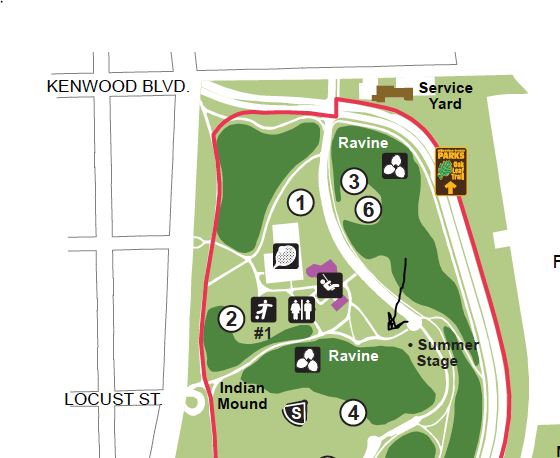
Fall Warbler Walks at Lake Park
Saturdays, Aug 23 – Sept 28 at 8:30
Meet at the feeders just south of the playground. See map left. Park in the playground lot (enter off Lincoln Memorial Drive) or on Locust Street in the park (entering off Lake Drive)

Fall Migratory Birding Series with Nearby Nature
Saturday Aug 24 from 10:00am-Noon
Harriet Tubman Park 4750 N 48th St Milwaukee 53218
There will be two more birding days: Sept 21 and October 19
Let’s gather together for an exciting event as our feathered friends gear up for their winter journey. Nearby Nature Milwaukee and Milwaukee County Parks are teaming up to bring the beauty of birdwatching right to your doorstep. Enjoy engaging birding education, arts and crafts activities, and more—all for FREE! Register here!
Community Science Day at Horicon Marsh
Saturday, August 24th, 2024 2:00 – 6:00 PM, https://horiconmarsh.org/community-science-day/
Have you ever wanted to see a bird up close and in the hand, tag a monarch or learn how to catch dragonflies and damselflies? Join us as we welcome nature experts to showcase all the ways that you can get involved and be a part of the scientific community! Watch Riveredge Nature Center bird bander, Jana, up close, join members of the Wisconsin Dragonfly Society to learn about these flying creatures and how to catch them, tag a Monarch Butterfly at the beginning of its journey to Mexico and more! Wisconsin DNR bat ambassadors and International Crane Foundation will be on site for programs and hands on activities related to bats and cranes! Learn about local bird clubs, the e-Bird citizen monitoring program, and join us for a special story time where you can meet the author of the children’s book “Lights Out”. This event is great for all ages and is a great way to take your curiosity about nature and turn it in to meaningful scientific data.
No registration is required. The Horicon Marsh Education and Visitor Center is located at N7725 Highway 28, Horicon, WI. For additional information please contact Liz Herzmann at 920-210-9054 or elizabeth.herzmann@wisconsin.gov.
Evening Bird Walk at Sheridan Park
Wednesday, Aug 28 at 5:00pm
The Wisconsin Metro Audubon Society and The BIPOC Birding Club will be getting together for a short walk at Sheridan Park. We’ll go where the birds take us which may include walking the paved biked trail, taking a steep winding trail down to the beach, and/or walking across the lawn for views along the bluff.
We’ll meet on the east side of the Sheridan Park Pavilion. The traveling beer garden will be there, so give yourself time to find parking and walk to our meeting spot.
This is a good event for birders of all skill levels, and because it is a short walk, children may enjoy it too.
SEPTEMBER
WSO Field Trip: Green Bay for Fall Warblers
Saturday, Sept 7. Registration Required
Bay Beach Wildlife Sanctuary offers good habitat for a nice assortment of migrating warblers. Several vireos (including Philadelphia) are often found, as well as various flycatchers, thrushes, etc. The lagoons provide a variety of ducks, Black-crowned Night-Heron, Green Heron, and Belted Kingfisher. Much of the morning will be spent on foot, so wear good walking shoes. Depending on conditions, we may also car caravan to visit other sites in the Green Bay area, and hope to find an assortment of shorebirds.
A Lesson in Fall Bird Identification by Mary Holleback and Carl Schwartz
Sept. 9 (Wednesday) at 7 p.m.
Hybrid live and Zoom program at Riveredge Nature Center; no registration required.
Are you baffled by confusing fall warblers? Do lbsb’s (little brown shorebirds) have you stumped? Would you like to impress other birders with your knowledge of hawk identification while watching them stream by the platform at Forest Beach Migratory Preserve? Then this program is for you. Mary Holleback, naturalist and citizen science manager at Riveredge, and Carl Schwartz, program coordinator for the Cutright Bird Club, will share some tips and tricks to help you ID some of Wisconsin’s most challenging fall migrants.
Zoom link: https://us06web.zoom.us/j/86162255800?pwd=8PxuvmS7vPOJ0xqnQJjtGh3DLeapH9.1
Class at Cedarburg Bog: Understanding Bird Populations and How They Change,
Thursdays 6:00-7:30pm, September 12 – October 17, 2024
Cedarburg Bog
Fall Big Sit with WI Metro Audubon
Saturday, Sept 12 7:00-11:00am at Wehr Nature Center
To celebrate World Migratory Bird Day and inspire a curiosity for birding, Wehr Nature Center is partnering with Wisconsin Metro Audubon Society (WMAS) to host a “Big Sit.” Observe, meet experts, and enjoy a morning of listening and observing birds by both sight and sound all from the convenience of one stationary location. Birders of all ages, abilities, and levels are welcome to discover birds during migration at the South Pier (not the white one). Binoculars will be on hand for visitors to try. No experience necessary. We will share an on-going list of the birds observed and post results on eBird.org as well as www.bigsit.org. Questions contact Pat Fojut at ptfojut@gmail.com
Raptor ID Workshop
Saturday, Sept 21 9:00-12:00pm, Schlitz Audubon Nature Center $40/$55
Have you ever wondered what kind of hawk is visiting your backyard? Or who is that mystery silhouette, soaring hundreds of feet overhead is? Join Raptor Educator, Cheyenne Smith, to learn the fundamentals of identifying Wisconsin raptors! With a visit from several of our raptor ambassadors, the first half of this workshop will offer an interactive exploration of birding principles, highlighting variations across raptor species to help you identify birds in the wild. During the second half, we’ll take a hike to put our newly learned skills to practice – at the height of fall migration, no less! Registration Required HERE
October
The “Big Sit” at Forest Beach Migratory Preserve
Oct 6 (Sunday) Starting at 6:30 a.m.
The Noel J. Cutright Bird Club, in cooperation with the Lake Michigan Bird Observatory and OWBC, will host its annual “Big Sit!” at Forest Beach Migratory Preserve, five miles north of Port Washington, on Sunday, Oct. 6. The count will begin at 6:30 a.m. on the Bill Cowart Memorial Hawk Watch Platform on the northeast corner of the preserve. The Sit’s 17-foot circle is on the perfectly-sized hawk watch platform at Forest Beach Migratory Preserve (4970 Country Club Rd., Port Washington). Since 2007, birders have recorded a total of 266 species at Forest Beach. Join us for a half-hour, or a half-day! And there will be donuts for the early birders. Questions: contact Carl Schwartz @ cschwartz3@wi.rr.com
WSO Field Trip: Harrington Beach Hawk Watch
10/6/24 or10/13/23 depending on weather conditions.
Registration Required
We begin our birding near the lower beach parking area of Harrington Beach State Park, initially checking the trees and lawn area for sparrows, warblers, kinglets, Hermit Thrushes, finches, etc. After an hour or so, the group will take a hike on some of the park’s roads or trails to look for additional species, and check the lake for waterfowl, gulls, loons and grebes. This park lies adjacent to Lake Michigan, which can help serve as a channel for migrants, including raptors, which can fly over in good numbers on days when migration conditions are conducive – usually meaning strong northwest or west winds. Please note that there is a state park entrance fee.
Later in the morning we may also venture south to Forest Beach Migratory Preserve and check for additional species at that site. Often our visit to that site coincides with their Big Sit event, and we may hike down to their hawk watch platform to join their bird count.
Trip registration opens on September 6, 2024.
“Facts, Fiction and Fun Stories about Owls” by Mary Holleback and Dan Wundrock
Oct. 9 (Wednesday), 7 p.m.
Hybrid live and Zoom program at Riveredge Nature Center; no registration required.
What’s a group of owls called?
How far away can an owl see at night?
How do they find their prey?
Just how good is their hearing?
Learn some fun trivia about a variety of Wisconsin’s most secretive night time avian predators. You might even find out “who cooks for you” or whoooooo’s the earliest nester in the state!
Mary is the naturalist and citizen science manager at Riveredge, serving as the onsite sturgeon project manager and director of the “Testing the Waters” high school water quality monitoring program. She holds a BA in conservation biology and an MS in curriculum and instruction from UW-Milwaukee.
Having done his undergrad and graduate work in biology, Dan spent the first 10 years of his career as a high school biology and special education teacher. He then spent the next 25+ years heading up science-based research and distribution companies. Dan brought his unique outdoor skills to Riveredge in 2012 as an environmental educator. He has spent numerous years researching and photographing birds in remote habitats of Lapland, Iceland, Newfoundland and Labrador and Alaska. Most recently he and three others traveled into a remote area of the Salonga National Park in Congo. While there they studied bonobos in an effort to ensure the survival of these endangered great apes as part of the Bonobo & Congo Biodiversity Initiative.
To join Zoom meeting: https://us06web.zoom.us/j/81623192214?pwd=zOa73Mmft0cnIW0V9LYKIbp80EKJ4B.1
Meeting ID: 816 2319 2214
Passcode: 258434
…
 Milwaukee Birders